What Is AI SEO Called? GEO, AEO, LLMO and Every Other Name
SEO for AI goes by several names - GEO, AEO, LLMO, AI SEO, and generative search optimization. They mostly describe the same discipline. Here is what each term means and which one to use.

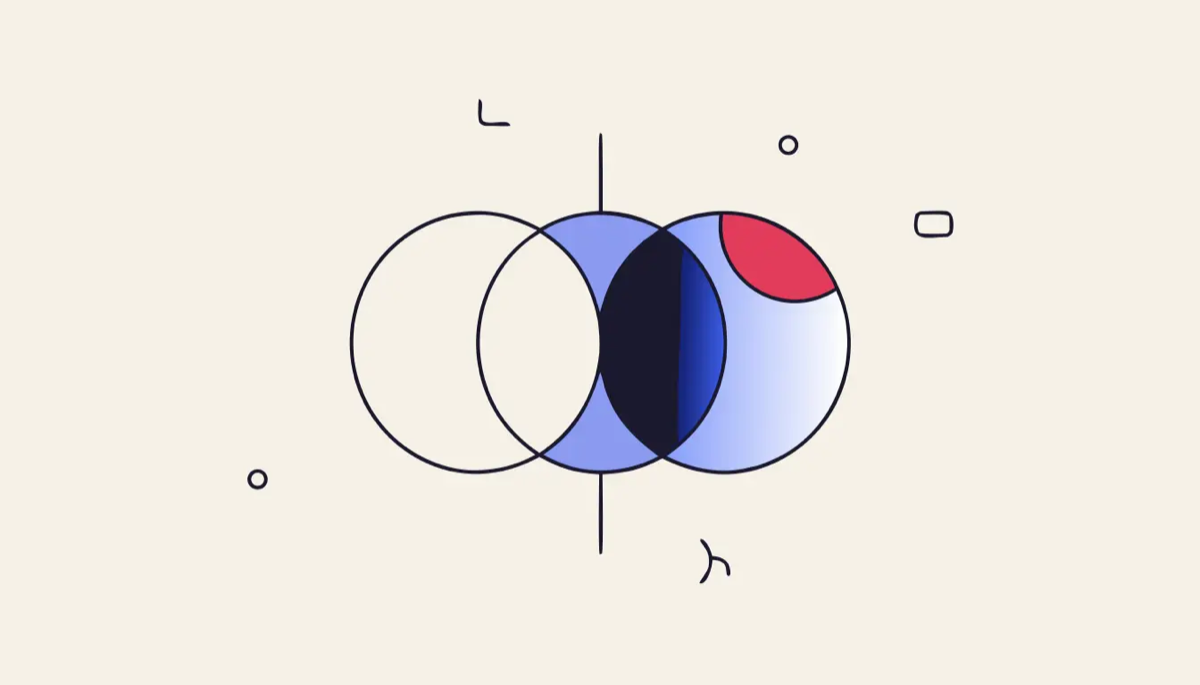
SEO for AI is most commonly called GEO (Generative Engine Optimization). You will also see AEO (Answer Engine Optimization), LLMO (Large Language Model Optimization), "AI SEO," and "generative search optimization." These terms mostly describe the same discipline - getting your brand cited and recommended by AI engines - with small differences in emphasis. GEO is the term gaining the most traction, so it is the safest default.
The Naming Problem: Why There Are So Many Terms
Ask ten marketers what to call SEO-for-AI and you will get five different acronyms. This isn't sloppiness - it's what happens when a discipline forms faster than its vocabulary settles.
The practice itself is clear: get your brand mentioned, cited, and recommended by AI engines like ChatGPT, Perplexity, Google AI Overviews, and Gemini. What isn't settled is the label. Different vendors, analysts, and practitioners coined terms in parallel, each emphasizing a slightly different part of the same elephant.
"The terminology is a distraction that trips people up before they even start," is how MentionLayer founder Joel House frames it. "GEO, AEO, LLMO - they're 90% the same discipline described from three angles. I tell teams to pick one word so they can align internally, then stop arguing about vocabulary and start fixing their actual visibility. The brands winning AI citations are not the ones with the best acronym - they're the ones who did the work."
The good news is that once you understand what each term emphasizes, the confusion disappears. Below is the full field guide.
Every Term, Defined
Here are the labels you will encounter, what each one means, and where the term came from.
GEO - Generative Engine Optimization. The most widely adopted term. It frames the target as generative engines that produce synthesized answers, and the goal as being cited within those answers. GEO is broad: it covers on-site content, off-site mentions, entity signals, reviews, and structured data. This is the term with the most momentum. See the complete GEO guide and what GEO stands for in marketing.
AEO - Answer Engine Optimization. Emphasizes optimizing for answer engines - anything that returns a direct answer rather than a list of links. AEO predates the ChatGPT era slightly, originally covering featured snippets and voice assistants, and expanded naturally to cover AI chat answers. In practice it overlaps almost entirely with GEO. The answer engine optimization primer covers it in depth.
LLMO - Large Language Model Optimization. The most technical framing. It centers on the model itself - how large language models represent your brand in their training data and retrieval. LLMO enthusiasts tend to focus on entity representation and the data the model has ingested about you.
AI SEO. The plain-language umbrella term. It simply means "SEO, but for AI." It is the easiest phrase for non-specialists to grasp and the most common search query, even if it is the least precise.
Generative Search Optimization (GSO). A less common variant of GEO, emphasizing generative search specifically. You will see it occasionally but it has not achieved the same traction as GEO.
GEO vs AEO vs LLMO vs AI SEO: Side by Side
The differences are more about emphasis than substance. This table lays them out.
| Term | Stands for | Emphasis | Traction |
|---|---|---|---|
| GEO | Generative Engine Optimization | The generative engine and its cited answer | Highest - the emerging default |
| AEO | Answer Engine Optimization | Direct-answer surfaces, incl. snippets and voice | High - strong in SEO circles |
| LLMO | Large Language Model Optimization | The model's internal brand representation | Moderate - technical audiences |
| AI SEO | (informal umbrella) | "SEO for AI" in plain terms | High as a search query, low as jargon |
| GSO | Generative Search Optimization | Generative search specifically | Low - niche variant of GEO |
Notice that all five point at the same practical work: making sure AI engines understand your brand, trust it, and name it in answers. The distinction between them rarely changes what you actually do. You will still be defining your entity clearly, earning third-party mentions, structuring content for extraction, and monitoring your citations - regardless of which acronym is printed on the strategy deck.
If you're auditing vendors and one calls it AEO while another calls it GEO, don't assume they do different things. Ask what signals they move and how they measure it - the label tells you almost nothing, the methodology tells you everything. A vendor selling AEO should still be able to show you how they move entity consistency and third-party mentions, and a GEO vendor should still care about answer-ready content structure. The checklist is the same either way: entity, mentions, reviews, structure, measurement.
Which Term Should You Actually Use?
For most teams, the answer is simple: use GEO. It has the most adoption, the broadest scope, and the clearest framing for the generative-answer era. Standardizing on GEO internally means your marketing, content, and leadership are all pointing at the same thing.
There are a few situations where another term fits better:
- Use AEO if your audience already thinks in terms of featured snippets, voice search, and direct-answer optimization. It bridges the old and new worlds cleanly.
- Use LLMO if you are speaking to a technical audience focused on how models represent entities in training and retrieval.
- Use "AI SEO" in customer-facing copy and ad targeting, because it is what non-specialists actually search for. When you want to be found by someone Googling the concept, plain language wins.
There is also a discoverability angle worth planning for. Your audience is split: specialists search for "GEO" and "AEO," while owners and executives search for "AI SEO" or plainer phrasing like "how to show up in ChatGPT." A smart content program covers both registers - using GEO as the internal organizing term while making sure the plain-language phrases appear where non-specialists will find them. You don't have to choose one word for the whole world; you choose one word for your team and speak your customers' language in public.
The one mistake to avoid is treating the terminology as the strategy. Picking a name is a five-minute decision. The real work is the discipline underneath it - and that work is identical no matter what you call it. Argue about the label for five minutes, settle it, and spend the rest of your energy on the signals that actually move visibility. For the mechanics of how the engines choose which brands to name, see how AI models decide what to recommend.
The Work Is the Same No Matter the Name
Whatever you call it, the discipline comes down to a consistent set of moves. If you get these right, you will win under any acronym.
- Define your entity clearly and consistently across your website, structured data, and third-party profiles so models know exactly what your brand is.
- Earn brand mentions in the sources AI engines retrieve from. A 2026 study from MentionLayer found brand mentions correlate roughly 3x more strongly than backlinks with AI visibility.
- Structure content for extraction - direct answers, clear sections, named expert authors. That structure earns citations about 65% more often, per the same study.
- Build reviews and directory presence, which the study identified as among the strongest raw predictors of AI visibility.
- Measure your share of the answer across engines and iterate monthly.
The cost of ignoring this work is steep. The MentionLayer AI Visibility Index - 1,004 businesses, 5 AI models, 95,392 data points - found 65.9% of businesses are effectively invisible in AI search. The acronym you use to describe the fix doesn't change how many brands need it.
MentionLayer was built to operationalize this discipline whatever you call it - measuring visibility across five engines, tracking citations, and building the off-page signal that gets brands named. A free AI visibility audit shows where your brand stands right now across the major AI engines.
From Term to Tactic: What Each Framing Nudges You Toward
Even though the terms describe the same discipline, the label a team adopts subtly shapes where they look first. Understanding that bias helps you borrow the best instinct from each without getting boxed in.
If you frame it as AEO, your instinct is to optimize the answer surface - lead every page with a crisp, direct response, build FAQ blocks, and win the featured-snippet-style extraction. That instinct is genuinely useful; direct answers get lifted into AI responses. The risk is stopping at on-page and neglecting off-site mentions.
If you frame it as LLMO, your instinct is to obsess over how the model represents your brand as an entity - your knowledge-graph presence, your structured data, the consistency of your descriptions. Also valuable, because entity clarity is a gating factor. The risk is treating it as a purely technical problem and underinvesting in reviews and community mentions.
If you frame it as GEO, your instinct is the broadest - you think about the whole ecosystem of signals a generative engine weighs, on-site and off. This is why GEO tends to win as the organizing term: its framing naturally pulls in entity work, third-party mentions, reviews, and content structure together.
If you frame it as "AI SEO", your instinct is to extend your existing SEO habits. That's a fine on-ramp, as long as you remember the factor mix is different - brand mentions matter more than backlinks here, and entity consistency matters more than keyword density.
The practical takeaway: adopt GEO as your organizing word because its scope is widest, but steal the AEO instinct for content structure and the LLMO instinct for entity discipline. The best programs quietly do all three. To see how the underlying signals combine, the complete GEO guide maps the full system.
Frequently Asked Questions
Is GEO the same as AEO?
Almost entirely. GEO (Generative Engine Optimization) and AEO (Answer Engine Optimization) both describe optimizing to be cited by AI-driven answer surfaces. AEO originally covered featured snippets and voice assistants and expanded to AI chat answers, while GEO was coined for the generative-AI era directly. In practice they cover the same work with slightly different emphasis.
What does LLMO stand for?
LLMO stands for Large Language Model Optimization. It is the most technical of the AI-SEO terms and focuses on how large language models represent your brand in their training data and retrieval. It overlaps heavily with GEO but emphasizes entity representation inside the model itself.
Which term is winning - GEO or AI SEO?
GEO is winning as the industry term of art, while "AI SEO" remains the more common everyday search query. If you are aligning a team or evaluating vendors, GEO is the safest default. If you are writing customer-facing copy or targeting search demand, "AI SEO" is the plainer phrase people actually type.
Do the different names mean different strategies?
Rarely. GEO, AEO, LLMO, and AI SEO all point to the same core work: defining your entity clearly, earning brand mentions, structuring content for extraction, and monitoring citations. When evaluating a vendor, ignore the label and ask what signals they move and how they measure results.
Check Your AI Visibility Score
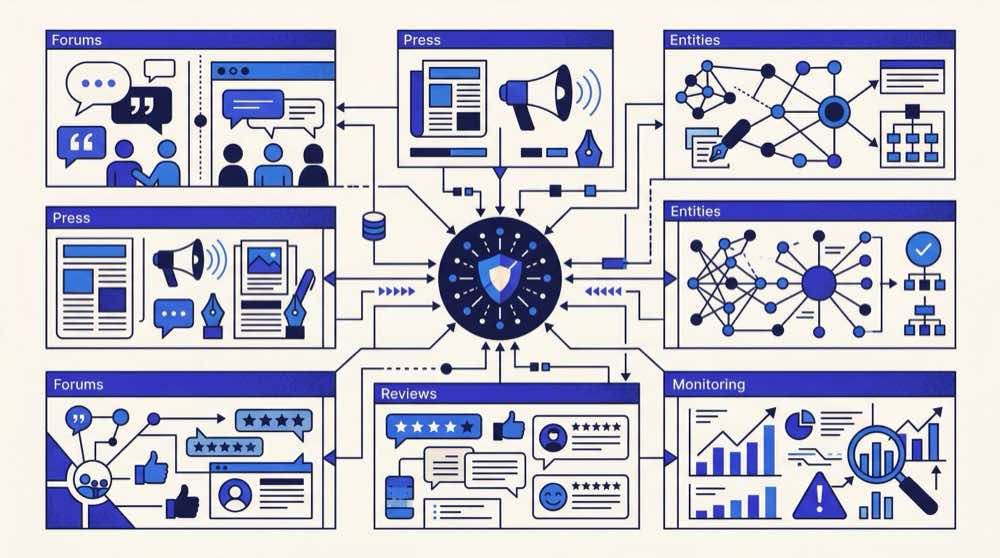
Run a free 5-pillar audit and see where your brand stands across Citations, AI Presence, Entities, Reviews, and Press.
Run Free Audit →Related Articles
What Is Answer Engine Optimization (AEO)?

What Is Generative Engine Optimization (GEO)? The Complete Guide for 2026

What Does GEO Stand For in Marketing? (And What It Doesn't)

AI SEO vs Traditional SEO: What Changed and What Didn’t in 2026
What Is AI Visibility? The Complete 2026 Primer
The GEO Briefing
What the AI engines changed this week
One email. Fresh data from our 1,004-business visibility index, what moved, and the single highest-leverage thing to do about it.