Best Content Formats for Getting Cited by AI Models
A ranked guide to the content formats that AI models cite most frequently — from comparison articles and FAQ pages to data compilations and expert roundups. Includes format-specific optimization tips and citation rate benchmarks.

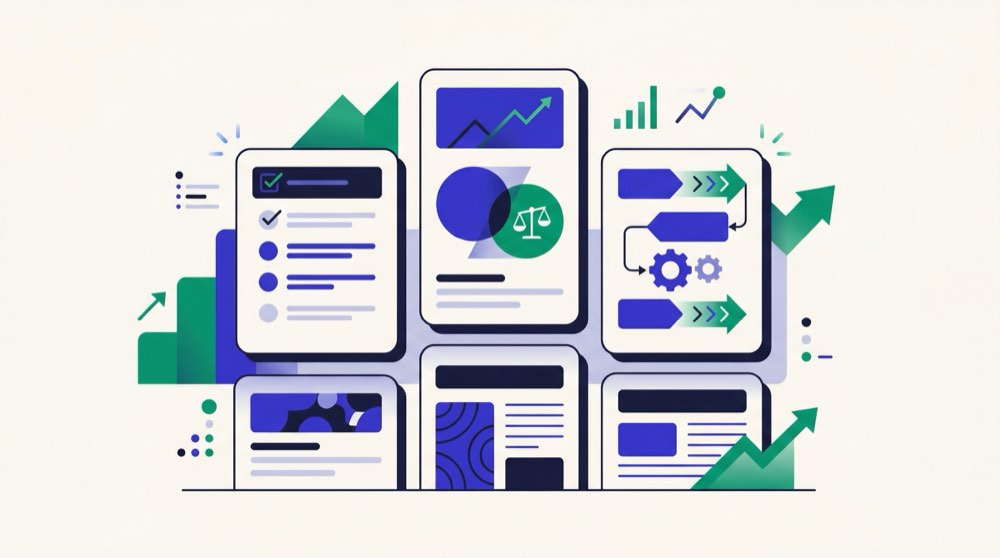
The content formats AI models cite most, ranked: comparison/versus articles, FAQ pages, data/statistics compilations, expert roundups with attributed quotes, how-to guides with numbered steps, and ranked listicles. Structuring your content calendar around these formats — rather than generic blog posts — can increase AI citation rates by 2-4x.
Content Formats Ranked by AI Citation Rate
AI models do not cite all content formats equally. Their retrieval and synthesis architecture naturally favors formats that contain structured, extractable information over unstructured narrative prose.
According to Joel House, founder of MentionLayer and author of AI for Revenue, "When we analyze which pages on client websites get cited by AI models, the pattern is consistent: structured formats outperform narrative formats by 2-4x. A comparison article with a clear table gets cited more than a thought leadership essay of equal quality. An FAQ page gets cited more than a long-form guide covering the same information in paragraph form. The content quality may be identical — the format determines whether AI models can efficiently extract and cite it."
This does not mean you should only create structured formats. Narrative content builds brand affinity and captures queries that structured formats cannot. But your content calendar should allocate at least 60% of new content to the formats below for maximum AI citation ROI.
| Rank | Format | AI Citation Rate | Why |
|---|---|---|---|
| 1 | Comparison/versus articles | Highest | Directly answers "which is better" queries |
| 2 | FAQ pages | Very high | Q&A format maps to AI prompt structure |
| 3 | Data/statistics compilations | Very high | AI models extract specific numbers |
| 4 | Expert roundups (attributed) | High | Named expertise signals authority |
| 5 | How-to guides (numbered steps) | High | Sequential structure is extractable |
| 6 | Ranked listicles | High | AI models cite ranked recommendations |
| 7 | Glossary/definition pages | Medium-high | Concise answers to "what is" queries |
| 8 | Case studies | Medium | Specific results data is valuable |
| 9 | Industry analysis | Medium | Unique perspective provides information gain |
| 10 | General blog posts | Low-medium | Unstructured narrative is hard to extract |
The Top Three Formats in Detail
1. Comparison/versus articles. When users ask AI models "which is better, X or Y?", the AI model retrieves pages explicitly comparing those options. Comparison articles with clear tables showing feature-by-feature breakdowns are extracted almost verbatim. Structure: brief intro, comparison table, detailed analysis per criterion, clear recommendation with reasoning.
2. FAQ pages. The question-answer format maps directly to how users prompt AI models. Each Q&A pair is a self-contained citable unit that can be extracted independently. Pages with FAQPage schema are 3.2x more likely to appear in AI Overviews. Every product page and service page on your site should include an FAQ section.
3. Data/statistics compilations. AI models cite specific numbers with attribution. A page titled "AI SEO Statistics 2026: 50 Data Points" becomes a reference source that multiple AI queries pull from. Adding statistics improves AI visibility by 40.9% — aggregating statistics into a dedicated resource page amplifies this effect. Update statistics pages quarterly to maintain freshness signals.
"Your content strategy should include at least one comparison article, one FAQ page, and one statistics compilation per content cluster. These three formats alone can generate more AI citations than 10 general blog posts on the same topic," says Joel House.
For the complete framework for structuring any format for AI citability, see the citable content structure guide.
Format-Specific Optimization Tips
Comparison articles: Include a summary table within the first 30% of the article — the AI citation zone. Use consistent criteria across all compared options. End with a "Which should you choose?" section with conditional recommendations ("If you need X, choose A. If you need Y, choose B.").
FAQ pages: Keep answers to 50-80 words — concise enough for extraction, detailed enough to be useful. Implement FAQPage schema. Target long-tail question keywords in Q&A format. Include 10-20 Q&A pairs per page for comprehensive coverage.
How-to guides: Number every step. Bold the action verb at the start of each step. Include expected outcome after each step. Add a time/difficulty estimate. AI models extract numbered sequences more reliably than prose-based instructions.
Listicles: Rank items explicitly ("#1 Best..."). Include a brief evaluation for each item (2-3 sentences). Add a comparison table summarizing all items. See the listicle optimization guide for detailed tactics.
Expert roundups: Include full name and credentials for every expert quoted. Use the "According to [Name], [role at Company]" format — this improves citations by 28%. Include original insights, not generic advice. Aim for 5-10 expert perspectives per article.
Statistics pages: Cite sources for every statistic. Organize by sub-topic with clear headings. Include the year or date for each stat. Bold the numbers. Update at least quarterly to trigger freshness signals.
For agencies planning content across multiple clients, MentionLayer\'s audit identifies which content formats are underrepresented in each client\'s content mix, recommending specific format investments based on competitive gap analysis.
Not sure which formats your own pages are missing? Our free AI visibility audit checks how your content is structured for citation and emails the gaps back to you in about 20 minutes.
Frequently Asked Questions
Should I only create structured content formats?
No. Allocate roughly 60% of new content to high-citation structured formats (comparisons, FAQs, data, how-tos) and 40% to narrative formats (thought leadership, case studies, industry analysis). Narrative content builds brand personality, captures nuanced queries, and provides the unique perspectives that constitute information gain. The goal is a content mix that serves both AI citability and human engagement.
Can I convert existing blog posts into higher-citation formats?
Yes, and this is often the fastest path to improved AI visibility. Take your top-performing blog post on a topic and create derivative pieces: extract the key questions into an FAQ page, create a comparison article from any evaluative content, compile any statistics into a data page. This content refresh approach generates multiple citable assets from a single existing piece.
Which format works best for B2B vs B2C?
B2B: Comparison articles and expert roundups perform strongest because B2B buyers actively compare vendors and value expert perspectives. B2C: FAQ pages and ranked listicles perform strongest because consumer queries tend toward "best of" and specific product questions. How-to guides and statistics pages perform well for both. Data articles work universally — AI models cite specific numbers regardless of the audience context.
Check Your AI Visibility Score
Run a free 5-pillar audit and see where your brand stands across Citations, AI Presence, Entities, Reviews, and Press.
Run Free Audit →Related Articles

How to Structure Content in Self-Contained Citable Units

Content Marketing Strategy for 2026: How AI Changed What Works

What Is Generative Engine Optimization (GEO)? The Complete Guide for 2026

How to Create an AI-Optimized FAQ Page That Gets Cited