
What Is a Content Cluster? The Building Block of AI Authority
A content cluster is a group of interlinked pages — a pillar page plus supporting articles — that comprehensively covers a topic. AI models use cluster depth as a trust signal when deciding which sources to cite.

A content cluster is a pillar page plus 5-15 supporting articles that together cover every angle of a topic. Brands with well-structured clusters get cited by AI models significantly more than brands with scattered, unconnected content on the same subject.
Content Clusters: The Structure AI Models Trust
A content cluster is a group of interlinked web pages organized around a single core topic. At the center sits a pillar page — a comprehensive, long-form guide (3,000-5,000 words) that covers the broad topic. Around it are supporting articles — focused pieces (600-2,500 words each) that explore specific sub-topics, answer niche questions, define key terms, and provide tactical depth.
According to Joel House, founder of MentionLayer and author of AI for Revenue, "Content clusters are the architecture of topical authority. A single article about AI visibility is a data point. A cluster of 12 interlinked articles about AI visibility — covering fundamentals, tactics, measurement, tools, and case studies — is a body of evidence. AI models treat clusters as evidence of expertise, and they cite cluster-based content significantly more frequently than isolated articles."
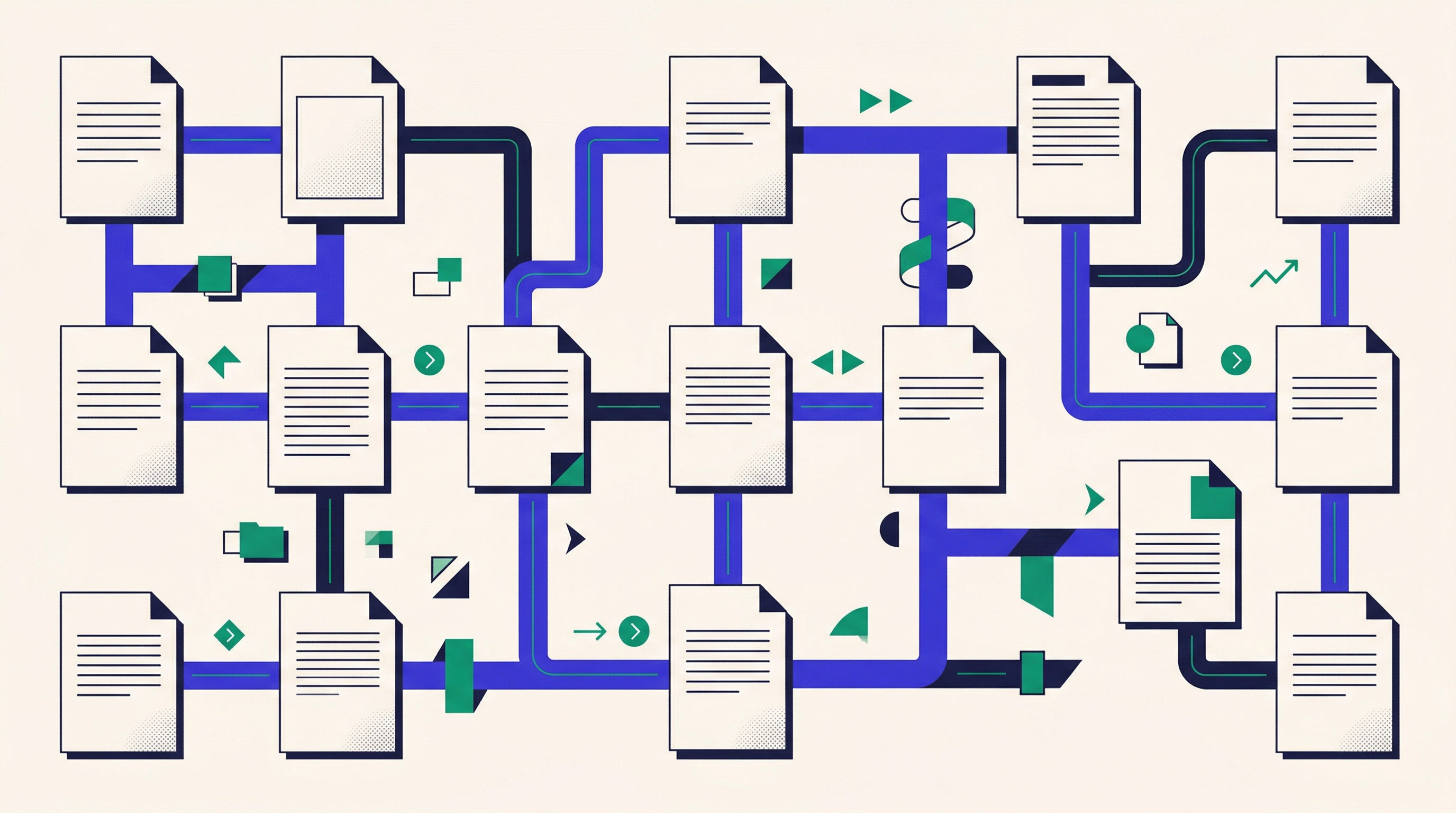
The linking structure is critical. Every supporting article links back to the pillar page using the pillar\'s target keyword as anchor text. The pillar page links out to every supporting article. Supporting articles link to 2-3 siblings within the cluster. This creates a web of topical signals that both Google and AI models use to evaluate your authority on the subject.
Anatomy of an Effective Content Cluster
A well-built cluster includes several content types that serve different purposes:
| Content Type | Length | Purpose | Example |
|---|---|---|---|
| Pillar page | 3,000-5,000 words | Comprehensive topic overview | "Topical Authority: The Complete Guide" |
| Standard articles | 1,500-2,500 words | Deep dives on sub-topics | "How to Build Topical Authority AI Trusts" |
| Glossary entries | 500-800 words | Quick definitions of key terms | "What Is Information Gain?" |
| Comparison articles | 1,500-2,000 words | X vs Y evaluations | "Topical Authority vs Domain Authority" |
| Data articles | 1,500-2,500 words | Statistics and original research | "AI SEO Statistics 2026" |
| How-to guides | 1,500-2,500 words | Step-by-step tactical content | "Content Refresh Playbook" |
The minimum viable cluster is 1 pillar page plus 5 supporting articles. The optimal cluster contains 8-12 supporting articles covering every major question within the topic. Beyond 15 articles, consider splitting into sub-clusters, each with its own pillar.
"The inflection point for AI citations typically occurs around 8-10 articles in a cluster. Below that, AI models treat each page individually. Above that threshold, you start seeing compounding returns where the cluster\'s collective authority lifts every individual page," says Joel House.
Why AI Models Reward Content Clusters
AI models face a core challenge: they must decide which sources are trustworthy enough to cite. Content clusters provide three signals that help AI models make this determination.
Signal 1: Retrieval density. A site with 12 articles on a topic has 12 potential retrieval hits for related queries. More retrieval opportunities mean more chances to be included in an AI response. Single articles have one chance; clusters have many.
Signal 2: Cross-validation. When an AI model retrieves your pillar page and finds that it links to 8 supporting articles that elaborate on each point, it gains confidence that your coverage is genuine and thorough. This is similar to how a researcher trusts a source more when it references multiple supporting studies.
Signal 3: [Consensus building](/blog/what-is-consensus-layer-ai-search). A cluster creates multiple pages that search engines index and that third parties can reference. When a Reddit user links to one of your supporting articles, and a journalist references your pillar page, and a Quora answer cites your data article, the AI model sees multi-source consensus from your domain. That consensus is the strongest citation trigger.
The practical outcome: content with proper H2/H3 hierarchy and structured sections — hallmarks of well-planned clusters — gets cited 65% more frequently by AI models. Building clusters is not just good SEO. It is the structural foundation of AI visibility.
Want to know whether your existing content is clustered tightly enough for AI models to trust it? Run a free AI visibility audit — it maps your topical coverage and shows where scattered pages are costing you citations.
Frequently Asked Questions
How many articles should be in a content cluster?
The minimum viable cluster is 1 pillar page plus 5 supporting articles. The optimal range is 8-12 supporting articles covering every major sub-question. The citation inflection point typically occurs around 8-10 articles, where AI models begin recognizing topical expertise. Beyond 15 articles, consider splitting into sub-clusters with their own pillar pages.
What is the difference between a content cluster and a topic cluster?
The terms are interchangeable. Both describe the same architecture: a pillar page at the center with supporting articles linked around it. Some SEO professionals use "topic cluster" to describe the strategic planning phase and "content cluster" to describe the published result, but functionally they are the same thing.
Should I publish all cluster articles at once?
No. Publish the pillar page first, then add 2-3 supporting articles per week. A steady publishing cadence signals active topic development to both Google and AI crawlers. Freshness is a strong citation signal — 76.4% of ChatGPT\'s cited pages were updated within 30 days. Gradual publishing also lets you measure performance and adjust the cluster plan as you learn.
Can content clusters work for small websites?
Yes, and often better than for large sites. A 20-page site with 15 pages deeply covering one topic has stronger topical authority in that niche than a 5,000-page site covering 200 topics shallowly. Small sites benefit from focus — every page reinforces the same topical signal. Choose a topic narrow enough to dominate but broad enough to sustain 8-15 quality articles.
Check Your AI Visibility Score
Run a free 5-pillar audit and see where your brand stands across Citations, AI Presence, Entities, Reviews, and Press.
Run Free Audit →Related Articles

Topical Authority: The Complete Guide to Dominating Your Niche in 2026

Pillar Pages and Topic Clusters: Building Authority That AI Recognizes
Internal Linking Strategy for AI: Helping Both Google and AI Models Understand Your Site

How to Build Topical Authority That AI Models Trust
