Pillar Pages and Topic Clusters: Building Authority That AI Recognizes
How to structure pillar pages and topic clusters so both Google and AI models recognize your expertise. Includes templates, linking patterns, and the specific formatting that maximizes AI citation probability.

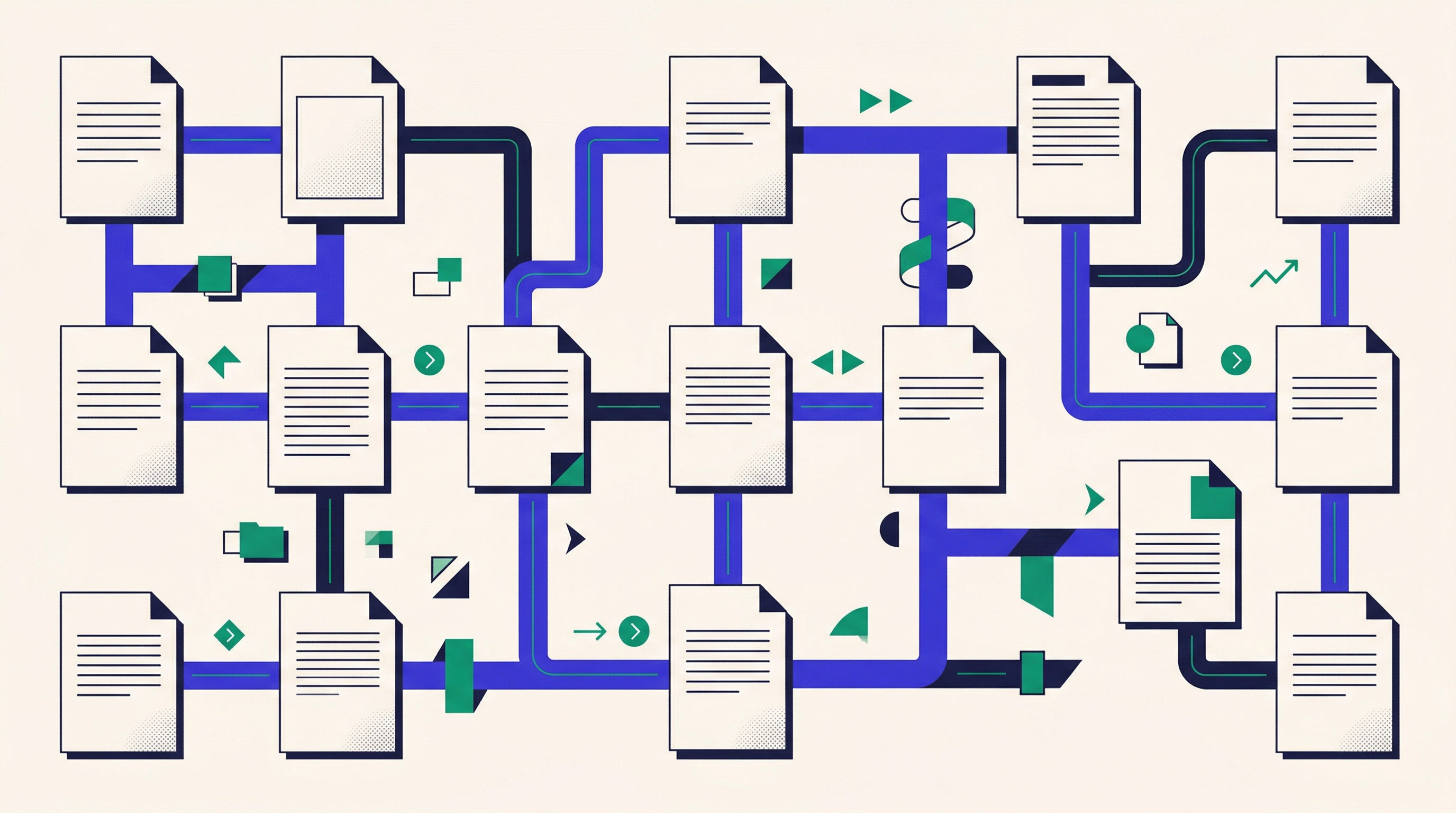
The pillar-and-cluster model gives AI models exactly what they need: a comprehensive resource (the pillar) validated by depth (supporting articles) connected through clear structure (internal links). Sites using this architecture get cited far more often than sites with unstructured content.
Why Topic Clusters Work for AI
The topic cluster model — a central pillar page surrounded by interlinked supporting articles — was originally designed for Google\'s evolving ranking algorithms. But it turns out that the same architecture is precisely what AI models need to trust and cite a source.
According to Joel House, founder of MentionLayer and author of AI for Revenue, "When we analyzed the top-cited sources across ChatGPT and Perplexity, the overwhelming pattern was topic clusters. Not individual blog posts. Not thin landing pages. Comprehensive clusters with a central pillar and 8-12 supporting articles that collectively demonstrate you know this topic inside out."
AI models using retrieval-augmented generation retrieve multiple documents for each query. When several of those retrieved documents come from the same domain and are clearly interconnected — referencing each other, building on shared concepts, maintaining consistent expertise — the model gains confidence. This cross-document validation is what the consensus layer looks for at the domain level.
The data backs this up. Sites with structured topical authority get cited far more than sites with scattered content. Content with proper H2/H3 hierarchy — a hallmark of well-planned clusters — gets cited 65% more frequently. The cluster architecture is not optional for AI visibility; it is foundational.
The Pillar Page Template
A pillar page is a comprehensive, long-form guide (3,000-5,000 words) that covers a broad topic and serves as the hub of a content cluster. Here is the template that maximizes both Google rankings and AI citation probability.
Structure: 1. Opening section (200-300 words): Direct answer to the core question, primary statistic, expert quote. This is the AI citation zone where 44.2% of citations originate.
2. Definition/overview section (150-200 words): What is this topic, why does it matter, who needs to care. Links to the glossary definition page.
3. Core concept sections (4-6 sections, 150-200 words each): Each section covers a major sub-topic. Each links to its corresponding supporting article. Use clear H2 headings that match search queries.
4. How-to/implementation section (200-300 words): Practical steps with expert attribution. This section should feel actionable, not theoretical.
5. Common mistakes section (150-200 words): What to avoid. AI models frequently extract "mistake" content for cautionary queries.
6. Tools/resources section (150-200 words): Where relevant, link to product pages and related tools comparisons.
7. FAQ section (5-8 questions): Each answer 50-80 words, self-contained. Implement FAQPage schema for 3.2x higher AI Overview appearance rate.
"The pillar page should be the single best resource on its topic on the entire internet. Not the longest — the best. If you cannot honestly say that after publishing, keep improving it until you can," says Joel House.
Supporting Article Types and When to Use Each
A well-balanced cluster includes multiple content types. Each type serves a different search intent and AI citation pattern.
| Content Type | Word Count | Best For | AI Citation Pattern |
|---|---|---|---|
| Glossary/definition | 500-800 | Term definitions, "what is X" queries | Definitional citations, AI Overview answers |
| Standard deep-dive | 1,500-2,500 | Sub-topic exploration, "how to" queries | Detailed how-to citations, expert guidance |
| Comparison/versus | 1,500-2,000 | "X vs Y" queries, decision-stage content | Table extraction, comparative citations |
| Data/statistics | 1,500-2,500 | Data-hungry queries, benchmarking | Statistical citations (40.9% visibility boost) |
| Listicle | 1,200-2,000 | "Best X" queries, tool/resource lists | List extraction, recommendation citations |
| Short tactical | 800-1,200 | Specific questions, quick-answer queries | Direct answer extraction |
The ideal cluster includes: 1 pillar page, 2-3 glossary definitions, 3-4 standard deep-dives, 1-2 comparisons, 1 data/statistics article, and 1-2 short tactical pieces. This mix covers the full range of search intents within your topic.
Every supporting article must link to the pillar page (using the pillar\'s target keyword as anchor text) and to 2-3 sibling articles within the cluster. This internal linking pattern is what transforms individual articles into a recognized topical authority signal.
The publishing sequence matters: pillar first, then glossary definitions (they are referenced by other articles), then deep-dives and comparisons, and finally listicles and short tactical pieces that can reference the full library.
Cluster Architecture in Practice
Here is how a real topic cluster looks for the subject of "AI visibility":
Pillar page: "The Complete Guide to AI Search Optimization" — broad coverage of the entire topic.
Glossary/definitions: - What Is Answer Engine Optimization? - What Is LLMO? - What Is Prompt-Based Search? - What Is AI Referral Traffic?
Deep-dives: - How to Optimize Content for AI Search - How AI Models Choose Sources - Write Content That Gets Cited by AI
Data/statistics: - 25 AI SEO Statistics for 2026 - Content Freshness and AI Citations
Comparisons: - GEO vs AEO vs LLMO - ChatGPT vs Google Search Behavior
Short tactical: - The First 30% Rule
Notice how every piece serves a distinct sub-question while linking back to the pillar and to its siblings. The cluster collectively covers: what is it, why it matters, how to do it, key terms, data/benchmarks, comparisons, and tactical tips. This comprehensiveness is what AI models recognize as topical authority.
Use this same pattern for your own clusters. Map the sub-questions first, assign content types, then publish in the sequence described above.
Maintaining Clusters for Ongoing AI Citations
Publishing a cluster is not a one-time project — it is an ongoing investment. 76.4% of ChatGPT\'s cited pages were updated within 30 days. Stale clusters lose citation velocity.
Monthly maintenance: - Update the pillar page with new data, examples, and links to recently published supporting articles - Review and update statistics in data-focused articles - Add new FAQs based on emerging questions in your topic - Check that all internal links still work and point to the right destinations
Quarterly expansion: - Identify new sub-topics that have emerged since the cluster was built - Publish 1-2 new supporting articles to fill coverage gaps - Update the pillar page to reference new supporting articles - Re-run the AI visibility audit to measure citation progress
The content refresh playbook covers the detailed process for updating existing content without losing the SEO equity it has already built.
One critical maintenance task: track which articles in your cluster are earning AI citations and which are not. The articles that AI models ignore may need restructuring — better headings, more statistics, expert attribution, or schema markup. The articles that earn frequent citations are your templates for future content.
"Topical authority is not built and forgotten — it is built and maintained. The brands that refresh their clusters monthly maintain citation velocity indefinitely. The brands that publish and walk away see their AI visibility decay within 90 days," says Joel House.
Wondering which of your clusters AI models actually cite right now? A free AI visibility audit pinpoints which pillar pages are earning citations and which need restructuring — results emailed in about 20 minutes so you can prioritize your next refresh.
Frequently Asked Questions
How is a pillar page different from a regular blog post?
A pillar page is 3,000-5,000 words covering a broad topic comprehensively. A regular blog post is 800-2,500 words covering a specific sub-topic in depth. The pillar page serves as the hub that links to all supporting posts, while each supporting post links back to the pillar. The pillar targets a head keyword; supporting posts target long-tail variations.
How many topic clusters should my site have?
Start with 1-2 clusters in your highest-priority topics. Build each cluster to at least 8 supporting articles before starting a new one. Most businesses benefit from 3-5 mature clusters covering their core service areas. Going beyond 5 clusters simultaneously usually means stretching resources too thin — depth within each cluster matters more than the number of clusters.
Can I turn existing content into a topic cluster?
Yes. Audit your existing content for coverage of a single topic. Identify which pieces serve as potential pillar content and which are supporting articles. Strengthen the pillar page, add internal links between related pieces, fill gaps with new articles, and update outdated content. Retrofitting existing content into clusters is often faster than building from scratch because you start with published pages that already have some SEO equity.
Do topic clusters work for e-commerce sites?
Yes, with adaptation. E-commerce clusters center on product categories rather than informational topics. The pillar page is a comprehensive category guide, and supporting articles include buying guides, comparison pages, use-case articles, and FAQ content. The same principles apply: comprehensive coverage, strong internal linking, and expert attribution signal topical authority to AI models considering product recommendations.
Check Your AI Visibility Score
Run a free 5-pillar audit and see where your brand stands across Citations, AI Presence, Entities, Reviews, and Press.
Run Free Audit →Related Articles

Topical Authority: The Complete Guide to Dominating Your Niche in 2026

What Is a Content Cluster? The Building Block of AI Authority
Internal Linking Strategy for AI: Helping Both Google and AI Models Understand Your Site

How to Build Topical Authority That AI Models Trust