Topical Authority: The Complete Guide to Dominating Your Niche in 2026
The definitive guide to building topical authority that both Google and AI models recognize. Covers content clusters, pillar pages, internal linking, information gain, semantic SEO, and the specific signals AI models use to determine niche expertise.

Topical authority is the depth and breadth of expertise a website demonstrates on a specific subject. In 2026, it determines both Google rankings and AI model citations — brands with comprehensive topic coverage get cited significantly more often than those with scattered, shallow content.
Why AI Models Weight Topical Authority Heavily
Google has used topical authority as a ranking signal for years — the 2022 Helpful Content Update made it explicit. But AI models take the principle further because they face a harder problem: they need to decide not just what to rank, but what to *recommend*.
When a user asks Perplexity "what is the best CRM for small businesses?", the model retrieves relevant content and must decide which sources to cite. It cannot cite everything — Perplexity averages 21.87 citations per response, and ChatGPT averages 7.92. The selection criteria heavily favor sources that demonstrate comprehensive topic coverage.
The mechanism works through three layers. Retrieval frequency: a site with 40 articles about CRM software has more indexable content, which means more chances of being retrieved for CRM-related queries. Cross-validation: when the AI model retrieves your pillar page and then finds supporting articles on the same topic from the same domain, it increases confidence in your expertise. [Consensus building](/blog/what-is-consensus-layer-ai-search): deep topic coverage creates multiple touchpoints that external sources can reference, accelerating the third-party mention network that AI models weight heavily.
The data supports this. Content with proper H2/H3 hierarchy and structured sections — hallmarks of well-planned topical content — gets cited 65% more frequently by AI models. And first-person writing with author bylines yields 1.67x citation improvement, because named expertise on a specific topic signals topical authority to AI models.
The practical implication: a scattered content strategy that publishes one article per topic across dozens of subjects will underperform a focused strategy that publishes 20+ articles within a single topic cluster. Depth beats breadth for both Google and AI.
The Content Cluster Architecture
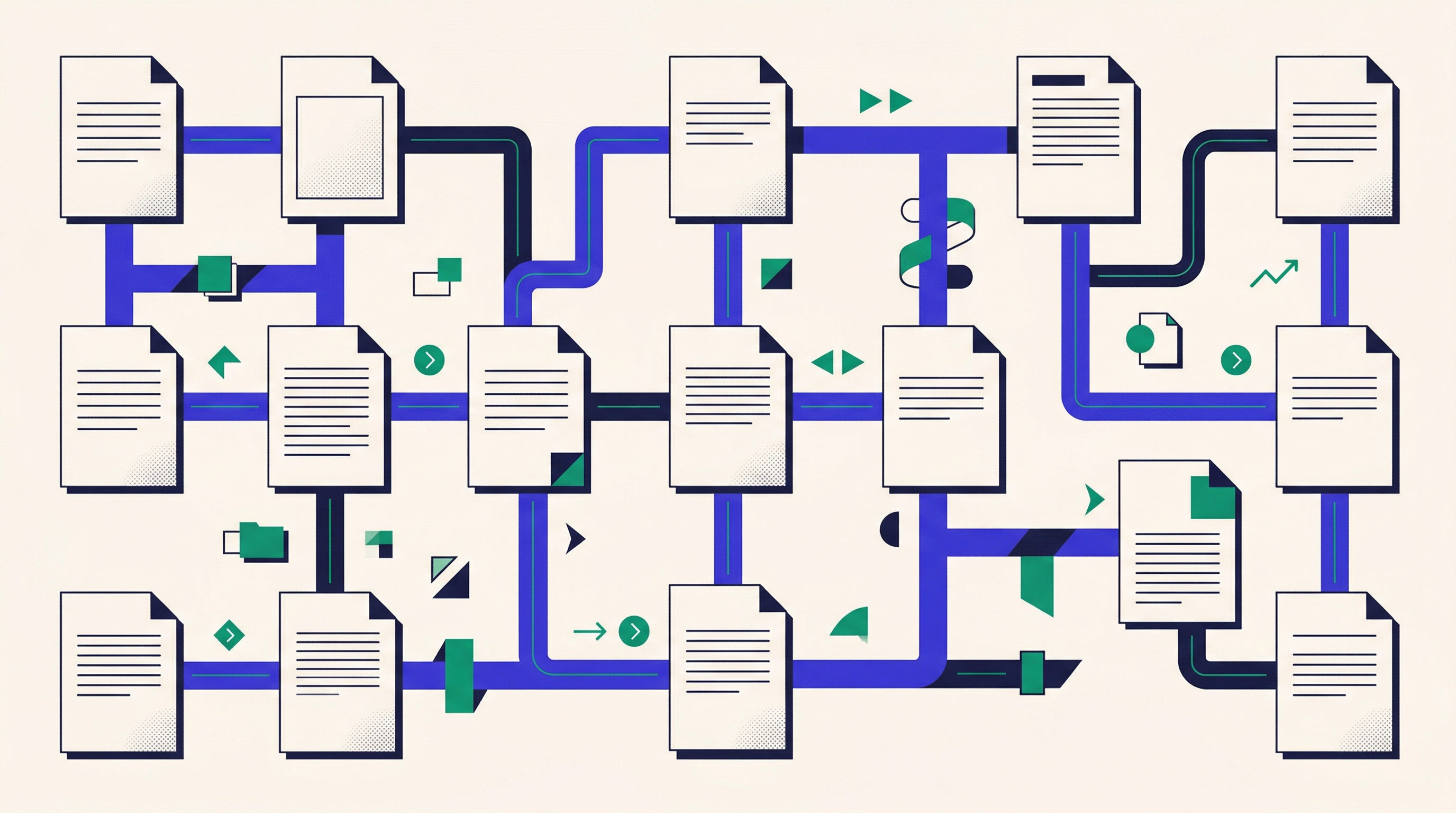
A content cluster is a group of interlinked pages that comprehensively cover a topic. At its center is a pillar page — a long-form, comprehensive guide to the core topic. Around it are supporting articles — focused pieces that cover specific sub-topics, questions, comparisons, and use cases. Every supporting article links back to the pillar page, and the pillar page links out to each supporting article.
The architecture serves two audiences simultaneously. For Google, it creates a clear topical signal — the internal linking structure tells the crawler that this collection of pages represents deep expertise. For AI models, it creates multiple retrieval entry points and cross-validation signals that build citation confidence.
Pillar pages (3,000-5,000 words) cover the topic broadly and link to every supporting article in the cluster. They target the head keyword (e.g., "topical authority") and serve as the primary ranking and citation target. They should answer the core question comprehensively while pointing readers to deeper dives on each sub-topic.
Supporting articles fall into several types: - Standard articles (1,500-2,500 words): deep dives on specific sub-topics - Glossary/definition pages (500-800 words): concise explanations of key terms - Comparison articles (1,500-2,000 words): "X vs Y" content that AI models extract from frequently - Data/statistics articles (1,500-2,500 words): original research and data compilations - How-to guides (1,500-2,500 words): step-by-step tactical content - Listicles (1,200-2,000 words): ranked or curated lists
A mature cluster contains 8-15 supporting articles around each pillar page. The cluster is complete when you have covered every major sub-question a searcher or AI model might have about the topic. An incomplete cluster with obvious gaps signals to AI models that your coverage is shallow.
Building Pillar Pages That AI Models Cite
Pillar pages are the highest-value content assets you can create for topical authority. A well-built pillar page ranks on Google for the head keyword, gets cited by AI models for multiple related queries, and passes authority to every supporting article in the cluster.
The structure that works best for AI citations follows the GEO content framework:
First 200 words: Direct answer to the core question, primary statistic, and expert perspective. This is where 44.2% of AI citations come from, so front-load your most valuable content.
Body sections: Each section should be 120-180 words and cover a distinct sub-topic that could stand alone as an answer. Use clear H2/H3 headings that mirror how users phrase questions. Include statistics with source attribution — adding stats improves AI visibility by 40.9%.
Internal links: Every section should link to the relevant supporting article for that sub-topic. These links serve double duty: they pass SEO authority and they tell AI models that you have deeper content available on each point.
Expert attribution: Include 2-3 quotes from named experts using the "According to [Name], [credentials]" format. This improves citations by 28% and signals E-E-A-T to both Google and AI models.
FAQ section: End with 5-8 frequently asked questions. Pages with FAQPage schema are 3.2x more likely to appear in AI Overviews. Each FAQ answer should be 50-80 words and self-contained.
"The pillar page is not a blog post — it is a reference document. Write it like you are building the Wikipedia article for your topic, then add the expert perspective and internal linking that Wikipedia cannot provide," says Joel House.
Supporting Articles: Depth That Compounds
Supporting articles do the heavy lifting of topical authority. Each one covers a specific sub-topic in enough depth that AI models can cite it as a standalone resource, while linking back to the pillar page to strengthen the cluster\'s overall authority.
The key principle is [information gain](/blog/what-is-information-gain-ai-search) — each article must contain something new that no other article in the cluster (or on competing sites) provides. This can be original data, a unique framework, a specific case study, a contrarian perspective, or a tactical detail that competitors have not covered.
For each supporting article: - Target a long-tail keyword that the pillar page mentions but does not deeply cover - Open with a direct answer to the sub-question (AI citation zone) - Include 2-3 Joel House quotes with original insights - Link to the pillar page using the pillar\'s primary keyword as anchor text - Link to 2-3 sibling articles within the same cluster - Link to at least one article in a different cluster (cross-cluster linking) - Link to at least one product page (/features, /how-it-works, /help) where natural
Publishing cadence matters. Publish the pillar page first, then add 2-3 supporting articles per week. This signals active topic development to both Google and AI crawlers. A complete cluster published all at once can work, but a steady publishing cadence with consistent freshness signals tends to build authority faster.
The minimum viable cluster is one pillar page plus 5 supporting articles. The optimal cluster is one pillar plus 8-12 supporting articles covering every major sub-question. Beyond 15 supporting articles, consider whether you are actually entering a new sub-cluster that deserves its own pillar page.
The Internal Linking Framework
Internal linking is the connective tissue of topical authority. Without it, your cluster is just a collection of individual pages. With it, your cluster becomes a structured knowledge base that both Google and AI models can navigate and trust.
The internal linking strategy for AI follows a layered approach:
Layer 1: Hub-and-spoke. Every supporting article links to its pillar page. Every pillar page links to all its supporting articles. Use the pillar\'s target keyword as anchor text when linking to it. This creates the primary topical authority signal.
Layer 2: Sibling links. Supporting articles link to 2-3 related articles within the same cluster. This creates multiple paths for crawlers and AI models to discover related content. A user reading about "content clusters" should find links to "pillar pages" and "internal linking" naturally within the content.
Layer 3: Cross-cluster links. Link from one cluster to another where topics naturally connect. Your topical authority cluster should link to your content seeding cluster when discussing how to distribute content. This creates site-wide topical breadth.
Layer 4: Product page links. Where content naturally discusses functionality that your product provides, link to the relevant product page. These links serve both conversion and SEO purposes — they signal that your site has both educational content and a practical solution.
Layer 5: Glossary links. First occurrences of key terms link to their glossary definitions. This signals comprehensive coverage to AI models and provides utility to readers.
The practical implementation: use a linking matrix spreadsheet that maps every article to its required links. Review the matrix monthly to ensure new articles are properly integrated into the linking structure. Orphan pages — articles with fewer than 3 internal links pointing to them — should be flagged and connected.
Common Topical Authority Mistakes
Mistake 1: Going too broad. Publishing one article each on 50 different topics creates zero topical authority anywhere. Brands that try to cover every keyword in their industry end up with shallow coverage that neither Google nor AI models respect. Pick 3-5 topic clusters and go deep before expanding.
Mistake 2: Skipping the pillar page. Publishing 10 supporting articles without a comprehensive pillar page is like building walls without a foundation. The pillar page anchors the cluster, attracts the head keyword traffic, and passes authority to supporting articles. Build it first.
Mistake 3: Weak internal linking. The content exists but the articles do not connect to each other. Without explicit links, search engines and AI models cannot see the cluster structure. Every article needs at least one link to the pillar and 2-3 links to siblings.
Mistake 4: Publishing and forgetting. 76.4% of ChatGPT\'s cited pages were updated within 30 days. Stale content loses citation velocity even if it was comprehensive when published. Schedule monthly updates to your pillar pages and quarterly updates to supporting articles.
Mistake 5: No original insight. If every article in your cluster says the same things that 10 competing sites say, you have coverage but no information gain. Each article needs at least one original data point, unique framework, or expert perspective that competitors lack. This is what transforms coverage into authority.
Mistake 6: Ignoring off-site signals. Topical authority is not purely an on-site metric. Brand mentions correlate 3x more than backlinks with AI visibility. Your on-site cluster establishes the foundation, but third-party mentions in forums, press, and review platforms validate it. The 6-pillar audit measures both on-site and off-site authority signals across AI Presence, Entities, Reviews, On-Page, Citations, and Press.
Your Topical Authority Action Plan
Here is the step-by-step implementation plan, whether you are starting from scratch or strengthening an existing content library.
Phase 1: Topic mapping (Week 1) - List every question your target audience asks about your core topic - Group questions into 3-5 potential clusters - Prioritize the cluster most aligned with your business\'s revenue keywords - Map the pillar page and 8-12 supporting articles for that cluster
Phase 2: Pillar page creation (Week 2) - Write the comprehensive pillar page (3,000-5,000 words) - Implement structured data (Article, FAQ, Organization schema) - Publish and submit to Google Search Console for indexing
Phase 3: Supporting article sprint (Weeks 3-6) - Publish 2-3 supporting articles per week - Each article links to the pillar and 2-3 siblings - Each article contains original insight or data - Cross-link to relevant product pages where natural
Phase 4: Off-site amplification (Weeks 4-8) - Seed citations in Reddit and Quora threads relevant to the cluster topic - Pitch 2-3 earned media placements on the pillar topic - Build review presence on platforms relevant to the topic
Phase 5: Measurement and iteration (Ongoing) - Track keyword rankings, AI citation rates, and organic traffic for the cluster - Identify gaps in coverage and publish new supporting articles - Update the pillar page monthly with new data and internal links to new articles - Run the AI visibility audit quarterly to measure overall authority growth
| Phase | Timeline | Key Output | Impact Metric |
|---|---|---|---|
| Topic mapping | Week 1 | Content map with 8-12 articles planned | — |
| Pillar page | Week 2 | Published pillar (3,000-5,000 words) | Head keyword ranking |
| Supporting sprint | Weeks 3-6 | 8-12 published supporting articles | Long-tail keyword rankings |
| Off-site amplification | Weeks 4-8 | 10+ third-party mentions | Share of Model increase |
| Measurement | Ongoing | Monthly audit score trending upward | Composite AI visibility score |
For a hands-on framework that sequences these phases into a complete campaign, follow the 90-day playbook. For agencies building topical authority across multiple client accounts, the agency guide covers how to systematize this workflow at scale with MentionLayer.
Not sure where your topic coverage stands today? A free AI visibility audit maps which of your clusters AI models already cite and where the gaps are — results emailed in about 20 minutes, so you know exactly which pillar pages to build first.
Frequently Asked Questions
How many articles do I need to build topical authority?
The minimum viable cluster is 1 pillar page plus 5 supporting articles. The optimal cluster is 1 pillar plus 8-12 supporting articles. The inflection point where AI models start recognizing topical expertise typically occurs around 8-10 quality articles. Going beyond 15 articles on a single topic may indicate you should split into sub-clusters, each with its own pillar page.
How long does it take to build topical authority?
The publishing phase takes 4-6 weeks for a complete cluster. Google typically recognizes topical authority signals within 2-4 months as the content gets indexed, earns engagement, and builds internal link equity. AI models can begin citing your cluster content within 30-60 days if the content includes statistics, expert attribution, and structured sections. The fastest path combines on-site publishing with off-site citation seeding.
Can small websites build topical authority?
Yes, and often more effectively than large websites. A 20-page site with 15 pages deeply covering a single topic has stronger topical authority in that niche than a 5,000-page site that covers 200 topics shallowly. Small sites have the advantage of focus — every page reinforces the same topical signal. The key is choosing a topic narrow enough to dominate but broad enough to sustain 8-15 quality articles.
Does topical authority help with AI visibility or just Google?
Both. Google uses topical authority as a ranking factor through its topicality scoring systems. AI models use it differently — they look for comprehensive coverage as a trust signal when deciding which sources to cite. Brands with deep topic coverage get cited by ChatGPT and Perplexity at a substantially higher rate than brands with scattered content. The investment in topical authority pays dividends across both traditional and AI search channels.
Should I build topical authority before or after starting GEO?
Simultaneously. Topical authority (on-site depth) and GEO (off-site visibility) reinforce each other. Your on-site content gives AI models something to cite. Your off-site citations drive traffic and authority back to your content. Starting GEO without on-site depth means AI models have nothing to reference. Building on-site depth without off-site signals means AI models may not discover your content. The 90-day playbook sequences both in parallel.
Check Your AI Visibility Score
Run a free 5-pillar audit and see where your brand stands across Citations, AI Presence, Entities, Reviews, and Press.
Run Free Audit →Related Articles

What Is Topical Authority and Why AI Models Care About It

How to Build Topical Authority That AI Models Trust

Pillar Pages and Topic Clusters: Building Authority That AI Recognizes
Internal Linking Strategy for AI: Helping Both Google and AI Models Understand Your Site