LLM Seeding vs Link Building: Which Matters More in 2026?
A data-driven comparison of LLM seeding (placing brand mentions in AI-cited sources) and traditional link building. Covers when each strategy is appropriate, ROI comparison, and how the two approaches work together in a modern search strategy.

LLM seeding and link building serve different search channels. Link building strengthens Google rankings through backlink authority. LLM seeding builds AI visibility through brand mentions in cited sources. In 2026, brand mentions correlate 3x more than backlinks with AI visibility — making LLM seeding essential for the fastest-growing search channel.
LLM Seeding vs Link Building: The Core Difference
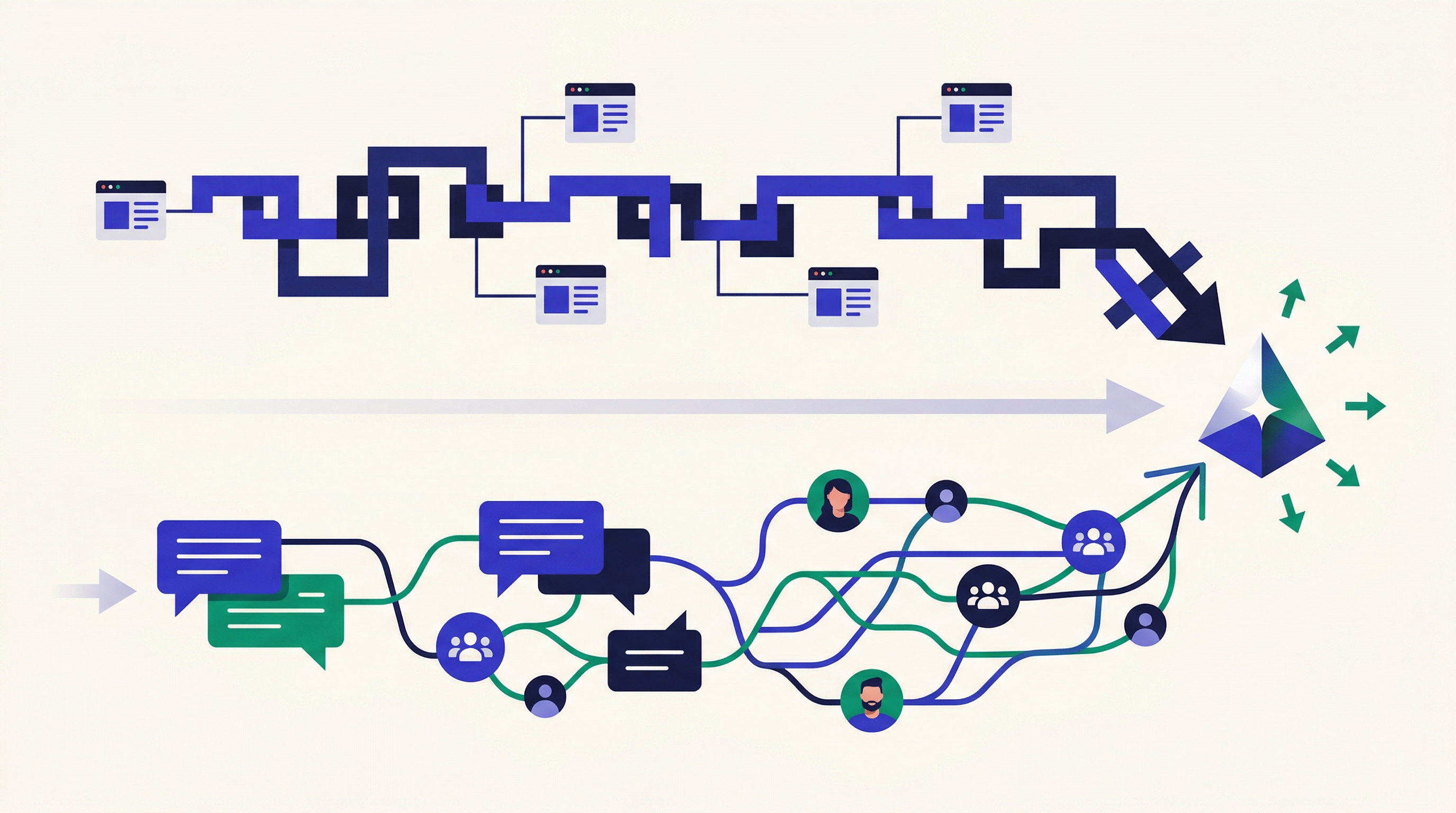
Link building and LLM seeding both aim to increase your brand\'s visibility in search results, but they target fundamentally different systems. Link building earns backlinks from other websites to improve Google\'s PageRank signal. LLM seeding places brand mentions in sources that AI language models retrieve and cite when answering user queries.
According to Joel House, founder of MentionLayer and author of AI for Revenue, "The relationship between backlinks and Google rankings has been the foundation of SEO for 20 years. But brand mentions now correlate 3x more than backlinks with AI visibility. This does not mean link building is dead — it still drives Google rankings. It means there is now a second search channel growing at 527% year-over-year where a different strategy is required. The brands winning in 2026 are investing in both."
The strategic question is not "which one should I do?" but "how should I allocate between them given my goals?" The answer depends on where your audience searches, your current competitive position, and your timeline for results.
Side-by-Side Comparison
| Dimension | LLM Seeding | Link Building |
|---|---|---|
| **Primary channel** | AI search (ChatGPT, Perplexity, Gemini) | Google organic search |
| **Core mechanism** | Brand mentions in AI-retrieved sources | Backlinks from authoritative domains |
| **Key metric** | [Share of Model](/blog/share-of-model-metric) | Domain Authority / referring domains |
| **Content type** | Forum responses, community answers | Guest posts, resource pages, PR |
| **Platforms** | Reddit, Quora, forums, review sites | Blogs, news sites, directories |
| **Time to impact** | 30-60 days | 3-6 months |
| **Cost model** | Response creation time | Outreach + content creation |
| **Traffic quality** | [4.4x higher conversion](/blog/ai-seo-statistics-2026) | Varies by intent match |
| **Persistence** | Forum posts live indefinitely | Links can be removed |
| **Scalability** | Limited by quality (15-25/month) | Limited by outreach capacity |
| **Risk** | Platform rule violations if done poorly | Google penalties if done poorly |
The most striking difference is time to impact. LLM seeding can generate measurable AI citation improvements within 30-60 days because AI models refresh their retrieval indexes frequently. Link building typically takes 3-6 months for Google to fully credit new backlinks and adjust rankings.
The second critical difference is traffic quality. AI referral traffic converts at 4.4x the rate of traditional organic traffic — and 5-9x higher for B2B. This makes the ROI per citation significantly higher than the ROI per ranking position in many categories.
When to Prioritize Each Strategy
Prioritize LLM seeding when: - Your target audience actively uses AI search tools (37% of consumers now do) - You sell a product or service that people ask AI models for recommendations on - Competitors are already being cited by AI models and you are not - You need faster results (30-60 day timeline vs 3-6 months) - You are in a category where Reddit and Quora discussions drive purchase decisions - Your AI visibility audit shows a significant citation gap vs competitors
Prioritize link building when: - Your primary traffic source is Google organic search - You are targeting high-volume head keywords where Domain Authority matters - Your product/service is not frequently discussed in forums - You are building long-term domain authority for a new site - Your competitors have significantly higher Domain Authority
Invest in both equally when: - Your audience splits between Google and AI search - You have the budget and team capacity for parallel campaigns - You want to build resilience across both search channels
"The biggest allocation mistake we see is brands spending 100% on link building and 0% on LLM seeding. Given that AI search is growing at 527% year-over-year and already accounts for 37% of initial searches, ignoring the AI channel is leaving significant revenue on the table. Our recommendation for most brands in 2026: at minimum, allocate 30% of your off-site SEO budget to LLM seeding," says Joel House.
How the Two Strategies Complement Each Other
LLM seeding and link building are not mutually exclusive — they reinforce each other through several mechanisms.
Mechanism 1: Authority amplification. A strong backlink profile improves your Google rankings. Higher Google rankings mean more of your pages get retrieved by AI models (because AI retrieval often uses Google\'s index). Link building indirectly improves your AI retrieval rate.
Mechanism 2: [Consensus building](/blog/what-is-consensus-layer-ai-search). When your brand appears in forum discussions (seeding) AND gets linked from authoritative publications (link building), AI models see multi-source consensus. This combined signal is stronger than either signal alone.
Mechanism 3: Content distribution. Guest posts created for link building can reference your forum presence ("as discussed in this Reddit thread..."). Forum responses can reference your published content ("I wrote about this in detail at..."). Each channel promotes the other.
Mechanism 4: Data synergy. Your link building outreach identifies industry publications and bloggers. These same contacts can become amplifiers for your seeded content — sharing your Reddit insights, citing your forum authority, or referencing your community expertise in their own content.
The integrated approach: build topical authority on your site, earn backlinks through digital PR and outreach, and simultaneously seed brand mentions in high-authority forums. The 90-day playbook sequences these activities in parallel for maximum compounding effect.
For agencies managing both strategies across client portfolios, MentionLayer handles the LLM seeding pipeline while integrating with existing link building workflows through the audit framework that measures progress across both channels.
Frequently Asked Questions
Is link building dead in 2026?
No. Link building remains important for Google organic rankings, which still drives the majority of search traffic for most businesses. What has changed is that link building alone is no longer sufficient for comprehensive search visibility. AI search is growing rapidly, and LLM seeding addresses this channel. Think of it as adding a second leg to your search strategy rather than replacing the first.
Can LLM seeding replace link building entirely?
Not yet. For Google organic rankings, backlinks remain a core signal. If your business depends heavily on Google traffic, cutting link building would hurt rankings. However, for businesses where AI search is already a significant traffic source, LLM seeding delivers faster and higher-converting results. The optimal approach is investing in both based on where your audience actually searches.
What is the ROI comparison between LLM seeding and link building?
LLM seeding typically delivers faster ROI (30-60 days vs 3-6 months) and higher per-session conversion rates (AI traffic converts 4.4x better). However, link building can drive higher total traffic volume from Google. The ROI calculation depends on your traffic source mix, average deal size, and time horizon. The ROI framework article provides specific calculation methodology for both channels.
How much should I budget for LLM seeding vs link building?
A common 2026 allocation for brands active in both channels is 50-60% link building, 30-40% LLM seeding, and 10% measurement and monitoring. Brands with strong existing Domain Authority should shift more toward LLM seeding. New brands building their first backlink profile should maintain a higher link building allocation until baseline authority is established. Adjust quarterly based on measured ROI from each channel.
Check Your AI Visibility Score
Run a free 5-pillar audit and see where your brand stands across Citations, AI Presence, Entities, Reviews, and Press.
Run Free Audit →Related Articles
Content Seeding Strategy: How to Place Your Brand in AI-Cited Threads

AI SEO vs Traditional SEO: What Changed and What Didn’t in 2026

The ROI of AI Visibility: How to Calculate and Prove Value
