Medium, Guest Posts, and Third-Party Publishing for AI Citations
Third-party publishing on platforms like Medium, industry blogs, and guest post sites creates the multi-source validation layer that AI models use to build recommendation confidence. Learn which platforms matter and how to optimize published content for AI citations.

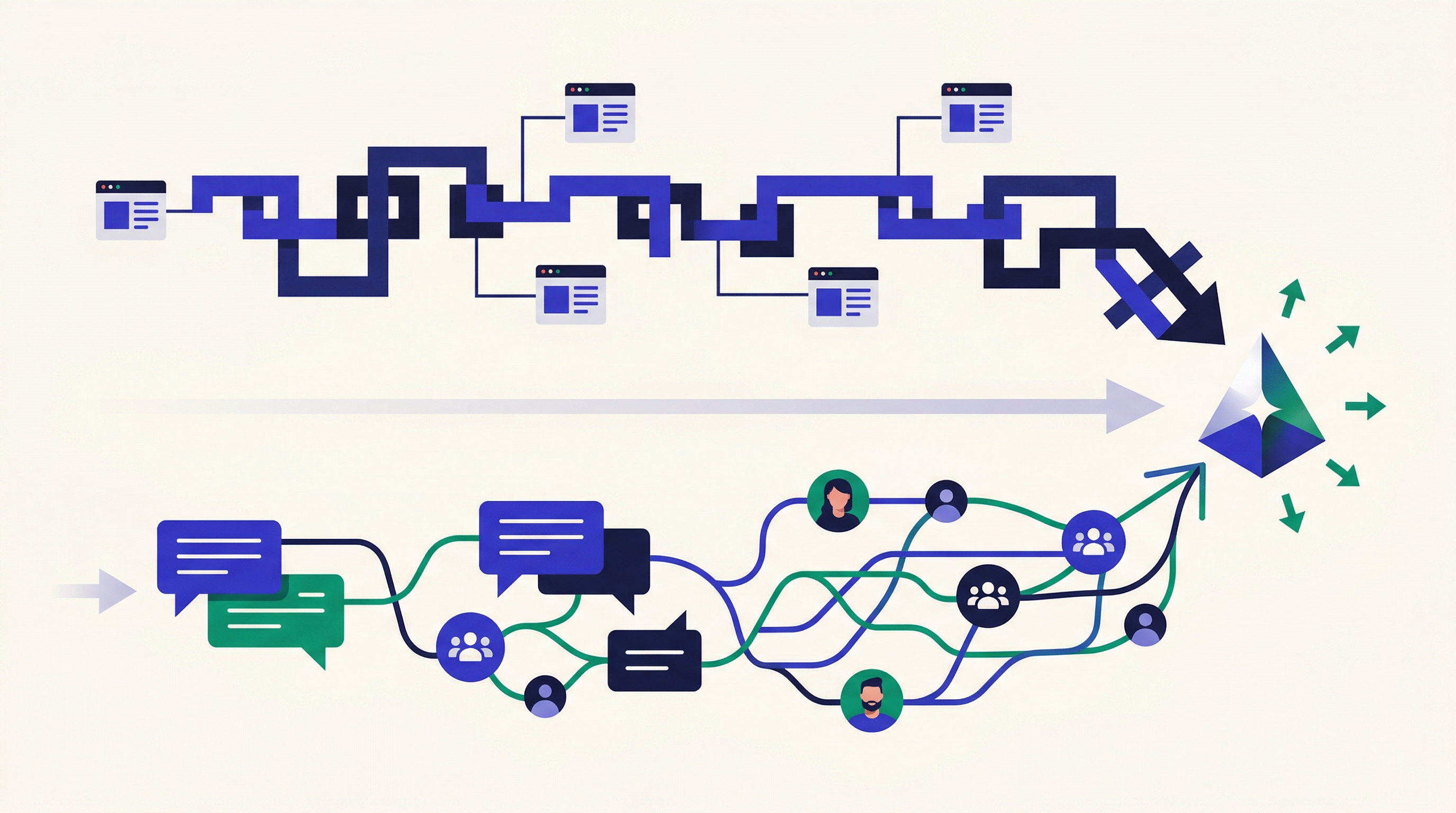
Third-party publishing on Medium, industry blogs, and guest post sites creates the multi-source consensus layer that AI models require before recommending a brand. Unlike traditional guest posting for backlinks, AI-optimized third-party content focuses on structured, citable articles that AI models retrieve independently.
Why Third-Party Publishing Matters for AI Visibility
AI models build recommendation confidence through multi-source consensus — finding consistent brand signals across independent sources. Your own website is one source. Forum mentions from content seeding are another. Third-party published content — articles on Medium, industry blogs, and guest post sites — adds a critical third layer.
According to Joel House, founder of MentionLayer and author of AI for Revenue, "Third-party publishing fills a specific gap in the AI citation ecosystem. Forum mentions provide community validation. Your website provides depth and authority. Published articles on external sites provide editorial validation — a third party reviewed and published your expertise. AI models weight this editorial signal heavily because it implies vetting. 90% of citations driving LLM visibility come from earned media, which includes third-party publications."
The distinction from traditional guest posting is important. Traditional guest posting focuses on acquiring a backlink to improve Domain Authority. AI-optimized third-party publishing focuses on creating independently citable content on high-authority domains — content that AI models can retrieve and cite regardless of whether it links back to your site.
Platform Selection: Where to Publish
Not all third-party platforms deliver equal AI citation value. The platforms that matter most share three characteristics: high domain authority, content that ranks on Google, and content accessible to AI crawlers.
| Platform | Domain Authority | AI Citation Value | Best For |
|---|---|---|---|
| Medium | Very high | High | Thought leadership, industry analysis |
| Industry-specific blogs | Varies (medium-high) | Very high for niche queries | Vertical expertise |
| Major publications | Very high | Highest (but hardest to access) | Broad authority |
| Substack | High | Medium-high | Newsletter/opinion content |
| Dev.to / Hashnode | High (tech niche) | High for technical queries | Developer-facing content |
| Guest posts on company blogs | Varies | Medium | Cross-promotion |
Medium deserves special attention. Its domain authority means well-written Medium articles rank quickly on Google for long-tail queries. Medium\'s content is fully accessible to AI crawlers. And Medium\'s editorial curation (publications, topics) provides additional signal quality.
Industry-specific platforms deliver outsized value for niche queries. A SaaS company publishing on SaaStr or a marketing agency publishing on Search Engine Journal creates citations in the exact editorial context where AI models look for expert recommendations.
"Prioritize platforms where your target audience\'s buying questions are discussed. A plumbing company publishing on Medium gets less AI citation value than publishing on Angi or HomeAdvisor\'s expert content sections. Match the platform to where AI models look for answers in your specific industry," says Joel House.
Optimizing Third-Party Content for AI Citations
Third-party articles should be optimized for AI citation using the same structural principles as your on-site content, adapted for the publishing platform.
Title optimization: Use question-format titles matching buying-intent queries. "How We Increased AI Visibility by 340% in 90 Days" or "The Complete Guide to [Category] for [Audience]" — these match the prompts users type into AI models.
Author bio: Include specific credentials and company mention. AI models extract author information when citing third-party content. "Joel House is the founder of MentionLayer and author of AI for Revenue" provides the E-E-A-T signals AI models value.
Content structure: Follow the 120-180 word section framework. Clear H2 headings, direct answers, supporting statistics, and practical takeaways. The same structure that makes your blog content citable applies to third-party articles.
Brand mentions: Mention your brand naturally within the context of your expertise. "At MentionLayer, we\'ve found that..." or "When we run AI visibility audits through MentionLayer, the most common finding is..." These contextual mentions get extracted alongside the surrounding expert content.
Cross-references: Reference your on-site content where natural. "I wrote a comprehensive guide to this on our blog" creates a breadcrumb that AI models may follow. However, the third-party article must stand alone — it should be independently useful even if the reader never visits your site.
Freshness: Update or repurpose third-party content quarterly. A Medium article updated with new data gets freshness signals that can re-trigger AI retrieval.
The Third-Party Publishing Calendar
Integrating third-party publishing into your AI visibility strategy requires consistent cadence, not one-off articles.
Monthly publishing targets: - 1 Medium article (1,200-2,000 words, thought leadership or data-driven) - 1 industry blog guest post (800-1,500 words, tactical expertise) - 2-4 LinkedIn articles (1,000-2,000 words, professional perspective)
Content repurposing pipeline: For every pillar topic in your content cluster, create derivative articles for third-party platforms: - Website pillar page: comprehensive guide (3,000-5,000 words) - Medium article: personal perspective on the same topic (1,500 words) - Industry blog: tactical how-to extract (1,000 words) - LinkedIn article: professional insight angle (1,200 words)
This creates 4 unique articles on the same topic across 4 different domains. AI models retrieving information about this topic encounter your expertise across multiple independent sources — the consensus signal that triggers recommendations.
Measurement: Track third-party articles through MentionLayer\'s monitoring to identify which platforms and article types generate the most AI citations. Adjust your publishing allocation based on measured citation rates. The 5-pillar audit includes earned media presence as part of the press/media pillar score.
For a broader perspective on earned media strategy, the digital PR guide covers how to combine third-party publishing with press outreach for maximum AI authority impact.
Frequently Asked Questions
Is publishing on Medium still worth it in 2026?
Yes, particularly for AI visibility. Medium\'s domain authority ensures that well-written articles rank quickly on Google, making them retrievable by AI models. Medium articles generate AI citations for thought leadership and expert analysis queries. The key is writing substantive, expertise-driven content — not promotional pieces. One quality Medium article per month can generate ongoing AI citations.
Does duplicate content matter for third-party publishing?
Yes, but the solution is straightforward: write unique articles for each platform, not duplicates. Cover the same topic from different angles — personal experience on Medium, tactical how-to for an industry blog, data analysis on LinkedIn. Google can handle similar topics across different domains as long as the actual text is substantially different. AI models benefit from seeing your expertise expressed differently across multiple sources.
How do I get published on industry blogs?
Start with Medium (self-publishing, no gatekeeper). Build a portfolio of 5-10 strong articles. Then pitch industry blogs with specific article ideas that demonstrate your expertise and match their audience. Reference your existing published work as proof of quality. Most industry blogs accept guest contributions from practitioners with genuine expertise — the barrier is proving you can write valuable content, not connections.
Should I focus on backlinks or AI citations from guest posts?
Optimize for both. Structure the article for AI citability (self-contained sections, statistics, expert positioning). Include a natural contextual link back to your site for SEO value. The best third-party articles serve both purposes — they rank on Google (providing backlink value), get cited by AI models (providing AI visibility), and drive referral traffic directly. Do not sacrifice article quality for link placement.
Check Your AI Visibility Score
Run a free 5-pillar audit and see where your brand stands across Citations, AI Presence, Entities, Reviews, and Press.
Run Free Audit →Related Articles
7 Best Platforms for LLM Seeding (Reddit, Quora, and Beyond)

Digital PR in the AI Era: Why Brand Mentions Now Beat Backlinks 3:1

Content Seeding Strategy: How to Place Your Brand in AI-Cited Threads

How to Build Multi-Source Consensus for AI Recommendations